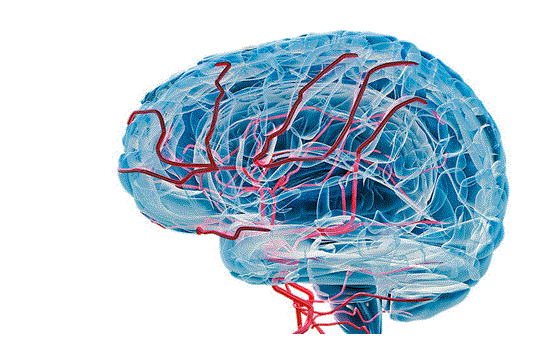
Anyone can develop dementia – it is not restricted to sex, age, gender, ethnicity or background although is more commonly diagnosed in those over 65 years of age. Dementia is a progressive syndrome (a group of related symptoms) associated with an ongoing decline of the brain and its ability to function effectively and having an impact on memory, communication and language skills, motor skills and concept of time and place. We are now living in an ageing society where there are increasing numbers of people living with Dementia, it is important that those who provide care and support are educated and able to deal with the challenging behaviours they can encounter do so in a compassionate and professional manner.
At the end of this course the learner will:
- Understand what the different types of dementia are and understand who is most at risk from the illness
- Be able to identify the five common types of dementia and know the common signs and symptoms to look for
- Understand the methods and investigations undertaken to diagnose dementia
- Describe what is meant by relationship-centred care and the Six Senses Framework
- Recognise and effectively manage challenging behaviours